
- Published on
Why does my baby need so much more help to sleep than other babies?
- Authors

- Name
- Julia Matteucci
- Title
- Certified holistic sleep coach
- Socials
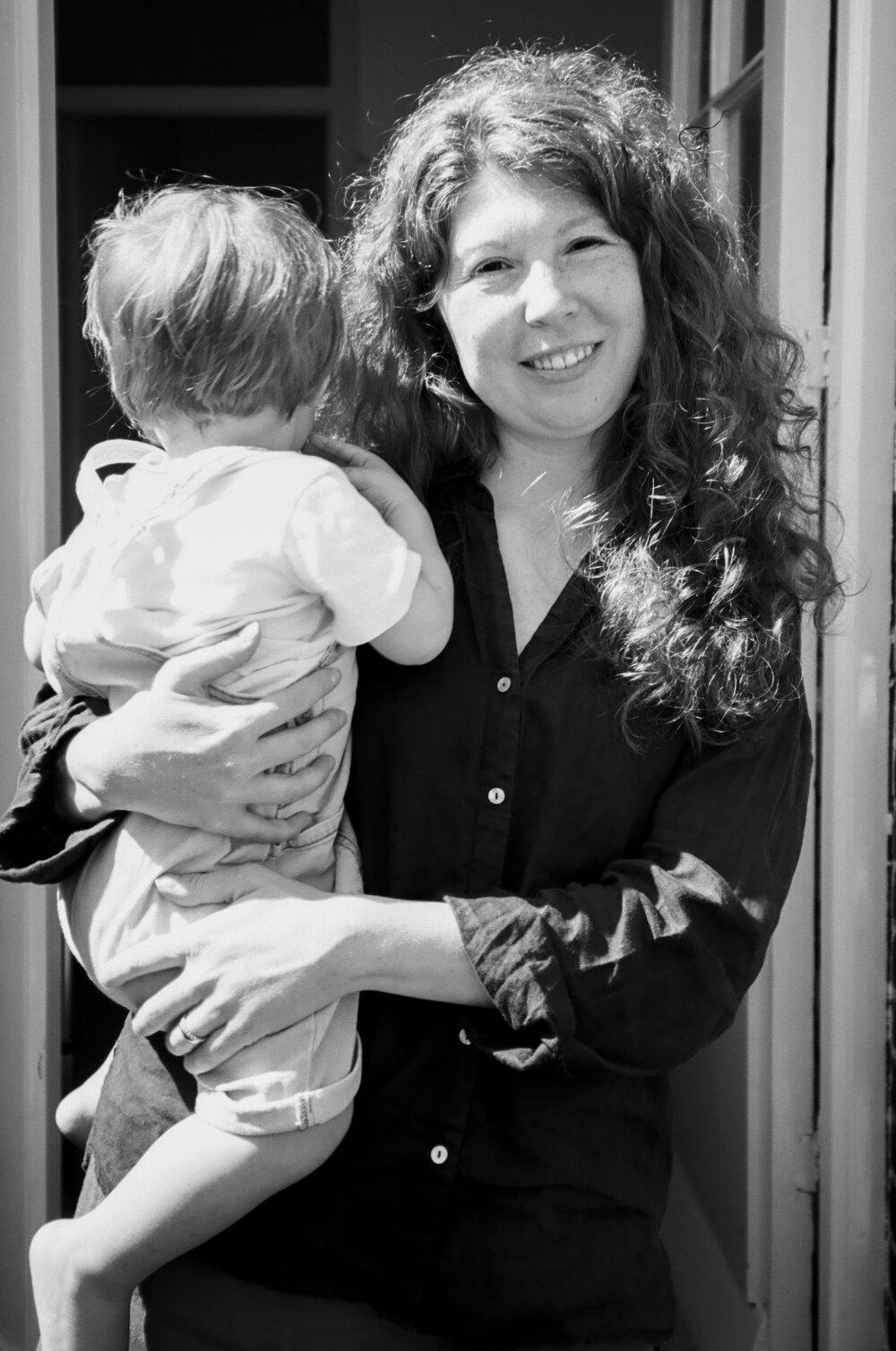
Certified holistic sleep coach Julia Matteucci of Tales of Sleep is here to answer our questions on understanding temperament and how it impacts your baby's sleep.
Julia's answer
"Our babies don't need perfect parents, they need consistent ones."
You prepared a calming, spa-like bath routine before bedtime, only for your baby to scream the moment they touched the water.
You're pacing the room for 30 minutes trying to get your baby to sleep, while the other moms in your pregnancy group talk about how they just put their baby down in the crib and they drift off peacefully.
You try hard to tune it all out, but these questions always creep in: What am I doing wrong? Or is there something wrong with my baby?
Because no matter what you do, your baby seems to need more than the babies around you: more rocking, more time to adjust, more holding... more of everything.
You're not imagining it. And you're not doing anything wrong. It's their temperament.
What is temperament, and what does it have to do with sleep?
Temperament is how your baby is wired to experience the world, from the moment they are born.
In the 1950s, researchers Thomas, Chess, and Birch began following children over many years and identified nine temperament traits, including activity level, intensity of reaction, adaptability, sensitivity to stimuli, and persistence.
Later on, depending on how these traits show up, babies were often described as one of three types: easy-going (the dandelion), difficult/highly sensitive (the orchid), or slow to warm (the tulip).
Easy-going babies, just like dandelions, are the babies that thrive in any environment, without much effort from your end. They are adaptable, mostly cheerful, and recover quickly from upset. Sleep rarely feels like a problem for them. They're the babies who can be put down "drowsy but awake" and drift off peacefully, or who easily settle into predictable rhythms.
On the other end of the spectrum, highly sensitive babies, just like orchids, can be stunning when they get exactly the conditions they need, but they struggle when those conditions are missing. These babies get overstimulated more easily and find change harder. They may be labeled fussy or colicky, struggle to switch off, and have less predictable sleep.
Does this mean some babies are simply better sleepers?
In part, yes, but temperament is just one piece of the sleep puzzle. An easy-going baby may sleep longer stretches, while a sensitive baby may wake more often. That isn't because the other parents found the perfect bedtime routine and you haven't. It's because your baby is just wired differently. That doesn't mean you just have to accept that sleep will always be difficult. But it might take a little bit more time to find those ideal conditions that will make sleep easier.
It's also important to remember that one temperament is not better than another. It's proof that all babies are different. The traits that make sleep tricky right now are often the very ones we hope our children keep as they grow. The intensity that turns bedtime into a negotiation today may be the drive that makes them stand up for what they believe in one day. The sensitivity that has them waking at every sound might be the same quality that makes them a deeply empathetic person.
"The traits that make sleep tricky right now are often the very ones we hope our children keep as they grow."
So what can I actually do to make sleep easier?
This is where goodness of fit helps. It describes the match between your baby's innate temperament and the environment around them, including the expectations and behaviors of their caregivers. Sensitive babies thrive just as much as easy-going ones when they're given what they need.
Caregivers who understand their baby's temperament can affect the relationship between themselves and their babies positively. They learn how to respond to their baby's cues, and how to modify their routines and environments so as to better fit the child's natural preferences, which ultimately makes life easier for everyone.
For sleep, that might mean:
- Offering extra comfort so your baby feels safe enough to switch off, and finding a set-up that works for both of you and keeps both of you calm and well regulated.
- Starting the wind-down earlier with the same order of steps each time, if your baby is slow to warm or highly sensitive.
- Adding input (deep pressure massage, rocking, something to listen to) if your baby has a high sensory threshold and needs more to wind down.
- Taking input away (a dark, quiet room) if your baby has a low sensory threshold and is easily overwhelmed.
- Accepting that every day can look a little different if your baby's natural rhythms are not inclined towards predictability.
"Sensitive babies thrive just as much as easy-going ones when they're given what they need."
Does it mean I need to do everything perfectly?
No. Our babies don't need perfect parents, they need consistent ones. And it's about learning as you go, adapting when needed, understanding and accepting the baby or the child in front of you.
Learn more with Julia
If you're looking to learn more about Julia's approach to sleep, you can attend one of her next Q&A sessions in Amsterdam:
- 18 November: Expert-led Q&A session with MamaSocial at Hannah's
- 23 November: Coffee & Sleep Q&A session with Mama Circle at Kanarie Club