

- Published on
Community Spotlight: Kyle K.
- Authors

- Name
- Kyle K.
- Title
- Community mom
- Socials
"Learn as much as you can beforehand, and then be prepared to throw it all away and let your gut make the call in the moment."
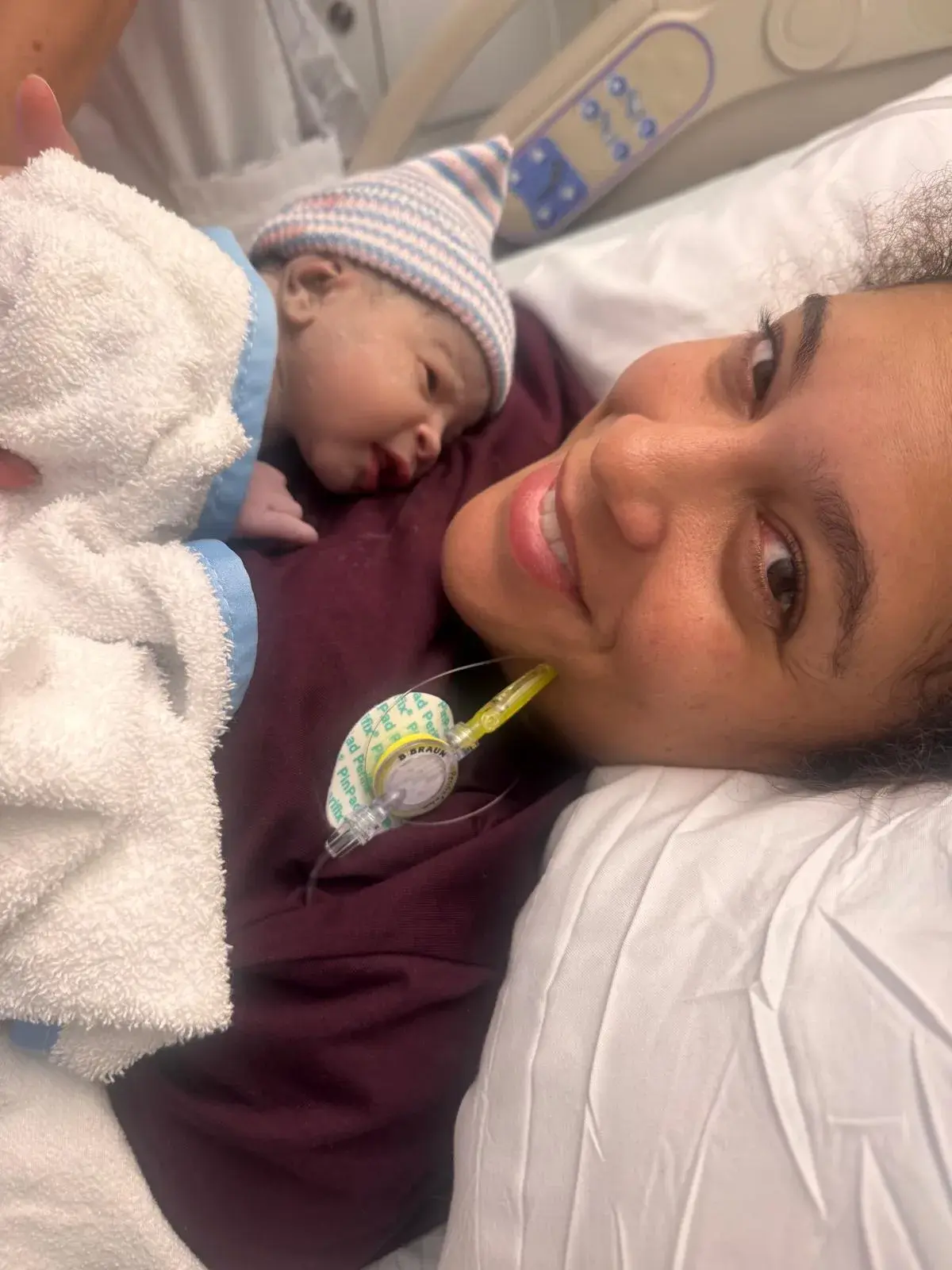
Kyle moved to Amsterdam at the end of July 2026, in the 34th week of her pregnancy. A month after giving birth to her daughter, she shares what it was like to navigate Dutch prenatal care as a newcomer, how a birth plan can throw not one but 6 (?!) surprises, receiving a walking epidural, and the support that carried her through.
Bio
- Name: Kyle K
- Originally from: NYC, USA
- How long have you lived in Amsterdam? Just a few months — since July 2026
- Age and gender of your child: Daughter, 1 month old
Interview
What brought you to Amsterdam?
I moved to Amsterdam at the end of July 2026, so I am still fairly new here! I came here because my partner is Dutch and we were expecting our first baby. After researching what pregnancy would be like in the US versus the Netherlands, I felt more supported by the medical system here. It also felt like Amsterdam could provide a safer, calmer environment to raise a child in.
How did navigating the Dutch prenatal care system feel, especially as someone who moved here mid-pregnancy?
In the US I was seen as a high-risk pregnancy solely due to my age; here, I was not judged for my age, my race, or my timing.
As I was still traveling all over the world for work, I’ll admit I only was able to take advantage of the Dutch prenatal care system but so much. I was fortunate to find a midwife that I could register with so late in my pregnancy (I was already at the end of my second trimester) and see me periodically when I happened to be in town.
When I finally moved to Amsterdam, I was already in the 34th week of my pregnancy. That being said, I found the care I received to be very supportive and attentive. They paid close attention to the reports from my doctors in NYC and advised me on vaccinations and other needs accordingly.
It was expressed to me that pregnancy and birth are seen as more of a natural event here in the Netherlands versus a medical one as in the US, and I appreciated that philosophy a lot. In the US I was seen as a high-risk pregnancy solely due to my age; here, I was not judged for my age, my race, or my timing… I enjoyed preparing for birth with my full team.
What did you do to prepare for the birth? Which resources ended up being most (and least) helpful?
I had the benefit of being spread across two different countries and as such, capitalized on that as much as possible. I was offered free prenatal and newborn care classes (online) through my American health insurance, and my partner would attend these classes with me from Amsterdam via Zoom. Topics included pregnancy milestones, birthing options, post-partum recovery, and early newborn care (feeding, bathing, clothing, etc.)
For myself, I took weekly prenatal yoga classes to nurture my body and mind, prepare for the discomfort of birth, and connect with my growing baby. It was very beneficial for me to have this safe space to communicate my swinging emotions (excitement, fear, hope…) and move my body consistently.
When I felt up for it, I took daily walks and listened to birthing audiobooks. I found books on hypnobirthing to be particularly helpful and interesting.
When I arrived here, I was encouraged to take a childbirth class with my partner. Learning positions and birthing tools that I liked was helpful. Also getting more information about what options were available at each hospital was also interesting and proved beneficial later when I ended up being induced.
How did you envision your birth, and how did it differ from your actual birth? (It always does!)
A lot of factors were completely out of my control: the timing, the location, the use of oxytocin versus natural contractions. All of those surprises came with lots of emotions and disappointments that need to be regulated away right away. That felt challenging at times, but staying focused was key.
I envisioned a slow and steady labor, mostly at home, with my partner and midwife by my side. That’s not what happened 😄
- Surprise #1: My waters broke suddenly while shopping one evening at 38 weeks exactly. I called the midwife, who met me at home. I was advised labor would start within the next 48 hours and to call them when it intensified appropriately. That never happened.
- Surprise #2: On day 3, I was being admitted to the hospital for an induction. There went my beautiful, natural labor at home.
- Surprise #3: All hospitals in Amsterdam were full, unfortunately, so the plan to birth an Amsterdammer went out the window.
- Surprise #4: We were sent to Zaandam, which also meant I would be working with the hospital’s midwives and not my own.
I recalled from the childbirth class a few weeks prior that they had a “walking epidural.”. It sounded interesting in the class, and I had a feeling I’d be trying it out later that day.
Choosing a walking epidural
I was 1cm dilated when I arrived at the hospital at 7am and started oxytocin immediately. After a grueling 7 hours of induced contractions, I was only a whopping 2cm dilated. I was feeling pretty discouraged. I had hoped to have a natural birth but had to accept that it was time to pivot (Surprise #5!). The doctors wanted to increase the oxytocin dosage and so I decided it was time to give that walking epidural I’d heard about a try. What a game changer!
I had no issues getting the epidural administered — shoutout to the great hospital team! The epidural immediately stopped the pain of each contraction. I was still aware of each contraction because I would get the shakes, but I could better focus and breathe through each one.
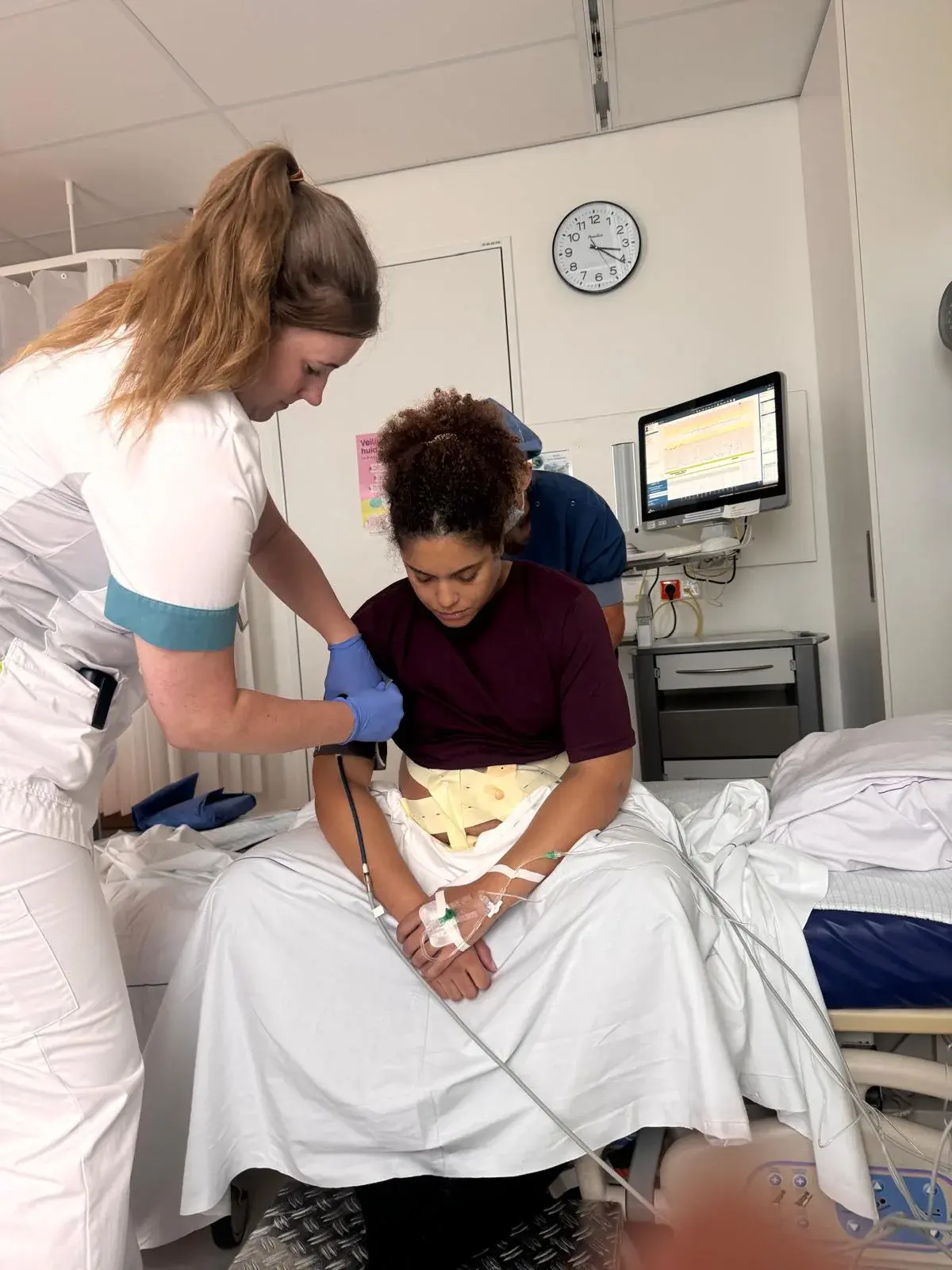
The epidural made my legs feel like they were asleep, like when you fall asleep on your arm and lose some control of the limb but not all feeling. This meant I could move (with some help) into different positions: on the bed or on a birth ball, stand and sway, or walk around my room slowly to help my labor along. It was great to be able to focus on helping my baby down, as she needed some help finding her way.
When it came time to push, 17 hours after being admitted, I was ready. Baby girl was delivered in 5 pushes, with the help of the amazing 3rd shift team. Pretty sure I worked with almost the entire Zaans Medisch Centrum staff throughout the long day. Every team that helped me and my baby was excellent.
When did you feel most powerful during your birth?
I had to channel all my strength precisely and literally envision her descent and exit. It was complete alignment in body and mind.
I felt the most powerful during the very end when it was time to push my baby out. I actually didn’t have strong urges at the end – no feeling like I had to poop, none of the “your body will take over” feelings. (Another surprise!) It was… odd. The team seemed a little confused as well. I had to push my baby out “manually” by physically channeling all my strength precisely and literally envisioning her descent and exit. It was complete alignment in body and mind. Again, not what I expected or prepared in the months leading up to this moment! I was so grateful to know and trust in my body so deeply that I could push her out in 5 pushes after laboring so long. We really are superheroes!
What helped you most through the birthing process?
Knowing all of my options beforehand helped an overthinker like me. When things needed to change or new decisions needed to be made, I was familiar with the techniques or medications already, so making decisions while laboring actively or being tired did not feel overwhelming.
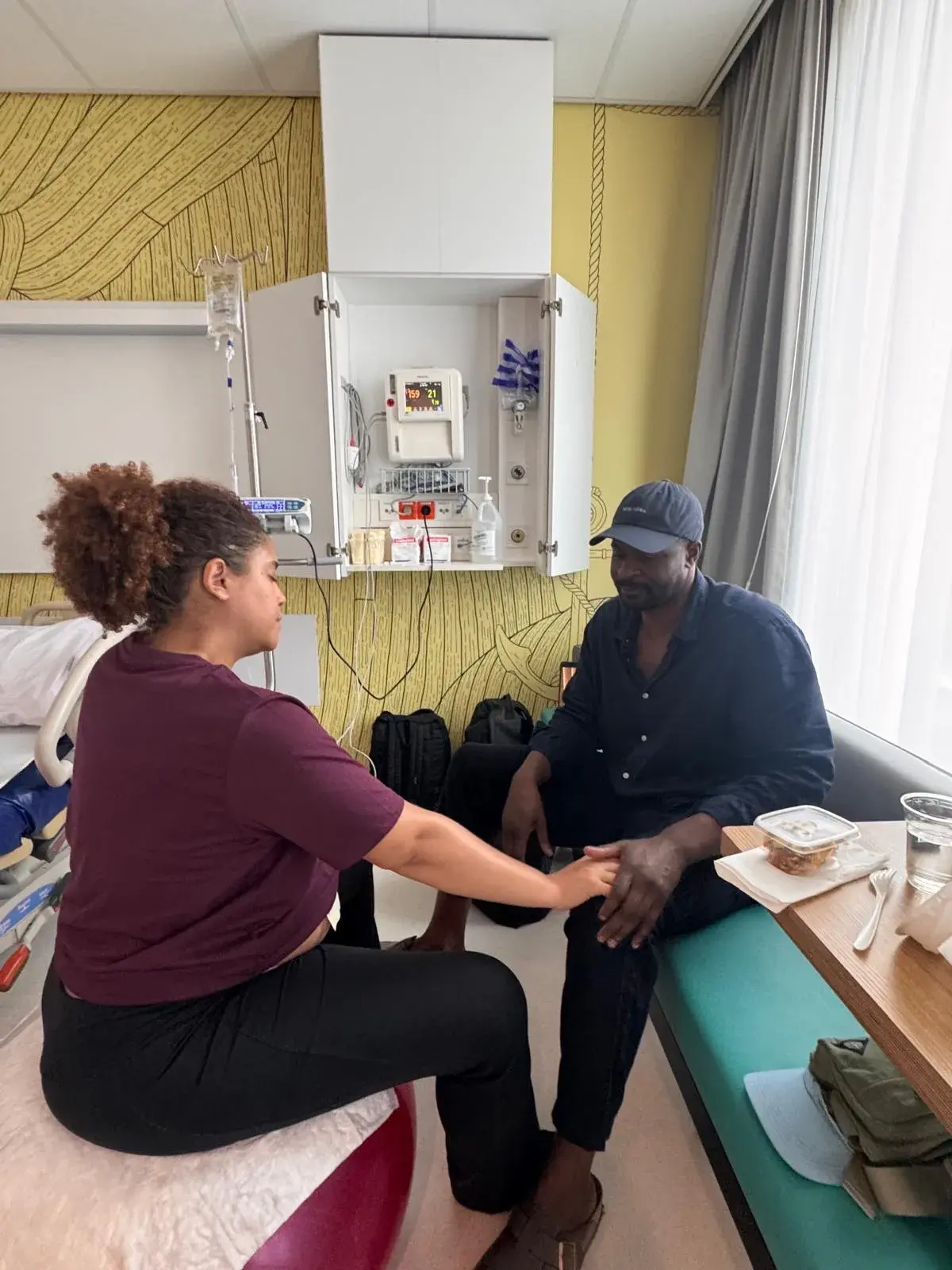
I’m grateful I was also physically fit enough to manage the entire birth process. Having wonderful partners — my partner and my mom — there with me to encourage me was also incredibly helpful.
After your baby arrived, what — or who — made the biggest difference in those first days or weeks?
My partner was a huge help to me. I think the fact that he was prepared — through classes and conversations about my needs — was really important, too.
I am lucky enough to have had a wonderful kraamzorg team that gave me tons of tips, plenty of time to rest, and honestly, some needed socialization in those early days. I often reflected on the many new mothers in the US who do not have that kind of help in the beginning and are relying purely on the internet for assistance through all of the newness. I was so grateful to have been so supported.
What's your best piece of advice for parents-to-be or new parents?
Learn as much as you can beforehand, and then be prepared to throw it all away and let your gut make the call in the moment.
Once baby is here, decide the best combination with your partner to take turns sleeping – most worries and/or issues creep up simply because you’re tired.
Take lots of pictures. The days blend together.
Good luck!
Expecting, or just had a baby? Your Season Group connects you with local families whose babies are due or born around the same time as yours. Join your Season Group.