
- Published on
Expert Spotlight: Danielle Bensky
- Authors

- Name
- Danielle Bensky
- Title
- Postpartum Doula
- Socials
Say hi to postpartum doula and Fourth Trimester Program facilitator Danielle Bensky of Mothers Transition! From the private sanctuary of 1-on-1 home visits to the communal joy of her Singing Mamas circles, she is on a mission to ensure no mother navigates the transition to parenthood alone.
In this interview, she shares her "in the trenches" perspective on why asking for help is actually a leadership skill, the importance of community and expert support for overwhelmed parents, and why we all need to lower the bar — and then lower it a little more — to truly thrive in those early weeks.
The One Ask
So many community parents have one cause or action that could really help shift the needle on something they care about. Let's celebrate both asking for help and small acts of community service ❤️
Danielle's One Ask: Keep building the village with me. Tell a friend who might be sitting at home feeling isolated about a Singing Mama circle or Fourth Trimester Program session. Word-of-mouth is everything, and sometimes just sharing that a safe space exists is the greatest gift you can give a new parent.
Bio
- Name: Danielle Bensky
- Originally from: Finland & Israel
- Age and gender of your children: 2 kids: 6 year old daughter and 2 year old son
- Service/expertise: Postpartum doula & community organizer
- Company: Mothers Transition
Interview
To start, can you share a bit about the different ways you support the postpartum community in Amsterdam?
I support the community in a number of ways that honors the "Fourth Trimester" and beyond:
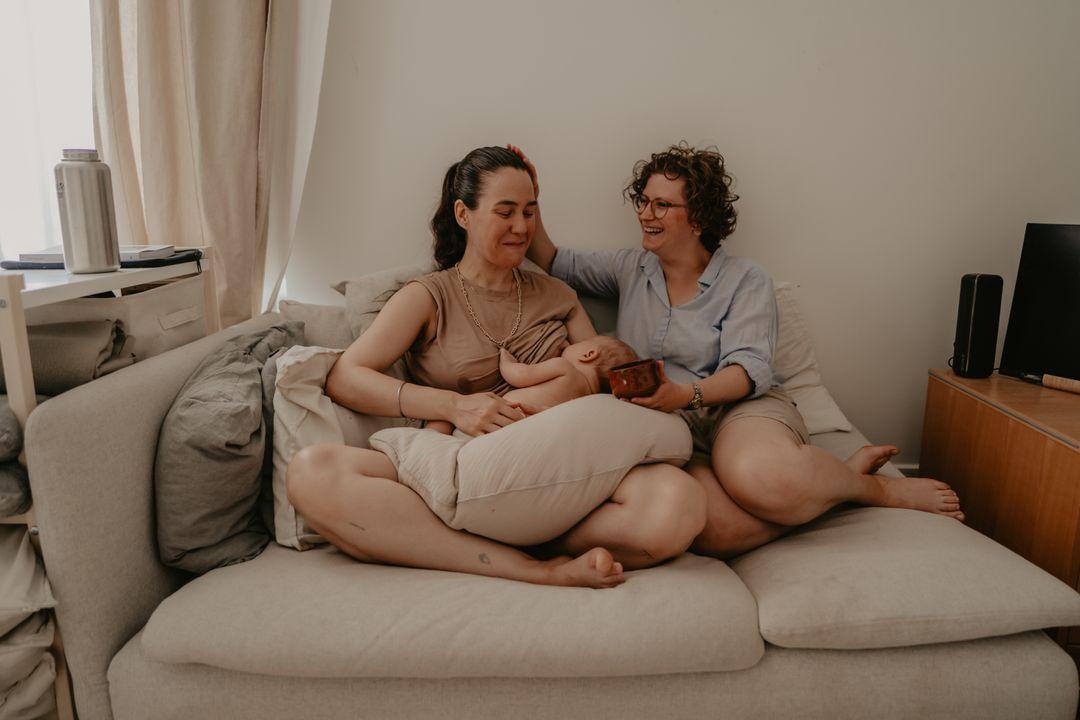
- Postpartum doula care: I provide dedicated 1 on 1, in-home support during the first 2–3 months after birth. My focus is on caring for the mother so she can focus on healing and bonding. It’s a beautiful and much needed continuation after the Kraamzorg leaves and takes place 1-2 times per week.
- Extended care: Because the need for support doesn't disappear when the "immediate" postpartum ends, I offer once-a-month sessions throughout the first year. This provides a continuous thread of care as the family evolves.
- Singing Mamas: Every week in the Rivierenbuurt, I host singing sessions designed to help moms find their "village." It is a space for those ready to leave the house and connect with others. Singing is a powerful tool that has been scientifically proven to reduce anxiety and depression and helps mothers feel better both emotionally and physically.
- Community facilitation: I am also proud to be a facilitator for APP's Fourth Trimester Program, where I help guide groups through the foundational early months of parenthood.
My passion is to ensure that no mother has to go through the transition into parenthood alone. Whether through one-on-one doula support or community singing, my goal is to provide a soft landing for every mother in our city.
How do these roles braid together for you?
Each of these roles meets a parent exactly where they are in their journey, providing a continuous thread of support from the "raw" early days into the wider world.
- 1-1 early postpartum: The early, vulnerable weeks are a time of deep physical and emotional healing. As a postpartum doula I meet parents in that space with nutritious cooking, bodywork, and deep listening, helping them navigate the many questions and insecurities that arise when getting to know a new baby.
- 1-1 within the first year: Because recovery from pregnancy and birth can take up to two years, my extended doula sessions (once a month during the first year) allow me to stay by the mother's side as parenting evolves. I continue to offer bodywork, emotional check-ins, and sometimes a home-cooked meal, ensuring that the "care for the caregiver" doesn't stop just because the initial postpartum period has ended.
- Building the village: Singing Mamas is the community bridge. Once my 1-on-1 clients are ready to leave the house and re-enter the world, I can invite them into this safe, communal space. It’s where they can be seen and heard by other mothers. I truly believe singing is medicine; it’s a tool that helps moms feel better from the inside out, allowing every emotion to be welcomed exactly as it is.
- Broadening the network: Facilitating the APP Fourth Trimester Program completes the circle. While Singing Mamas is a space for mothers, the APP program allows me to hold space for the entire family. I love that it includes partners, giving them a seat at the table and helping the whole family unit build their community together.
Together, these roles allow me to support the "village" at every level — from the private sanctuary of the home to the shared joy of a community circle.
From your perspective "in the trenches" with new families, what is the specific gap that the Fourth Trimester Program fills that parents might not find in existing care?
Most standard care is clinical and focused on the baby’s physical health, often leaving a significant gap in supporting the parents' emotional and relationship transformation. The Fourth Trimester Program bridges this by breaking the cycle of isolation. For many, this is the first time they’ve seen what postpartum is actually like, leading to the question: “Is this normal?” This program acts as a mirror, showing parents through a "village" that their struggles are both common and shared.
I also love that this program intentionally provides a seat for the partner. Often, the emotional work of building connections or learning about baby-related things falls on the mother. By providing space for both parents to navigate the "trenches" together, it helps the couple align and significantly reduces the heavy mental load on the mother.
Finally, the program offers a "safe" re-entry into the world. New parents crave connection but can feel overwhelmed by large social settings. By offering flexible online and offline elements, it meets families where they are. The social gatherings remain intimate and "well-held," providing a gentle environment to practice navigating the world with a baby for the first time.
"One parent shared how they felt saddened when their journey didn't look as imagined, only to be met with support from others navigating their own unexpected paths. It was a powerful reminder that the Fourth Trimester Program is about stripping away the shoulds and replacing guilt with self-acceptance and community." - Danielle
We are just a month into the current Fourth Trimester Program cohort. Has there been a specific moment or a "breakthrough" in a recent session that reminded you why this program is so important?
A breakthrough moment for me was seeing a parent arrive at an in-person meetup feeling completely frazzled after a difficult morning. Within a few minutes, she was sitting down and laughing with another parent. Seeing that transition from high stress to feeling 'held' by the community is exactly why I do this work. It proves that the 'village' isn't just an idea but a physical necessity.
Another moment that comes to mind was during our Newborn Feeding Strategies session where several parents shared about their unique feeding challenges from the hurdles of breastfeeding to the complexities of bottle-feeding. You could feel the weight lift as they realized that there was no judgment in the room, only empathy. One parent shared how they felt saddened when their journey didn't look as imagined, only to be met with support from others navigating their own unexpected paths. It was a powerful reminder that this program is about stripping away the shoulds and replacing guilt with self-acceptance and community.
What is a common postpartum myth or belief you find yourself gently unlearning with new parents most often?
The biggest myth I find myself debunking and unlearning is the idea that parents should be able to do this all by themselves. Somewhere along the way, we started treating independence as a badge of honor, but in postpartum and in parenting in general, it’s usually a shortcut to burnout.
I love reminding parents that raising a baby in a tiny bubble isn't actually natural, it’s actually a pretty modern invention. When a mom feels like she’s failing because she’s overwhelmed, I try to show her that she isn't failing at all but rather that she herself is trying to do a job that was meant for an entire village.
Once we unlearn the idea that asking for help is a sign of weakness, it gets much easier to reach out. Whether that’s hiring a doula, joining a singing circle, or letting someone else hold the baby while you eat. It’s not about failing to be independent but rather successfully building your support network.
What has your work as a postpartum expert taught you about yourself — both as a parent and as a professional?
"I don’t need to be a fixer to be an expert." - Danielle
My work has taught me that asking for help isn’t a failure, it’s actually a leadership skill. I’ve learned to value my own village just as much as the one I help build for others. As a parent, seeing the diverse “trenches” of so many families has helped me in the practice of unlearning my own perfectionism. If I’m telling my clients to be gentle with themselves and to lower their bar, then I want to be doing the same for myself.
Often, the most powerful thing I can offer isn’t advice, but simply presence. It’s the ability to sit with a family in the messy, raw moments and let them know they are okay. I don’t need to be a fixer to be an expert.
Looking at the year ahead, what is one big goal you have for yourself, whether as a business owner, a parent, or an expert?
My big goal for the year ahead is to grow the Singing Mamas community in Amsterdam. I want to make sure that every new mom who feels a bit lost or isolated knows there is a circle waiting for her in the Rivierenbuurt. I’d love to see the community become so strong that the moms start supporting each other even outside our sessions and really bringing that village feeling to life.
As a community of parents, how can we best support you and the work you’re doing?
You can support me by continuing to be real. Every time you’re honest about the messy parts of parenting, you’re helping us all unlearn those perfectionist myths. And of course, if you see me around Amsterdam or at an APP event, come say hi! Knowing that these connections are making a difference in your daily lives is what keeps my cup full so I can keep showing up for you.
Finally, what is your #1 piece of advice for someone currently expecting or in their first few weeks of parenthood?
To the one that is currently expecting a baby I would say to stop trying to be the perfect independent parent and start building your village now. We weren’t meant to do this alone. Whether it’s reaching out to a neighbor, joining a community like Singing Mamas, or being honest with your partner about your needs. Asking for help isn't a sign that you’re struggling; it’s a sign that you’re a great parent who knows what their family needs to thrive.
To the one that is in the first weeks of parenthood I would say to lower the bar, and then lower it a little more. There is so much pressure to bounce back or have it all figured out immediately. Give yourself permission to stay in your pajamas, let the dishes wait, and focus on healing and bonding. Your only job right now is to be exactly where you are. The rest of the world will wait.
Connect with Danielle
You can catch Danielle at the following upcoming events:
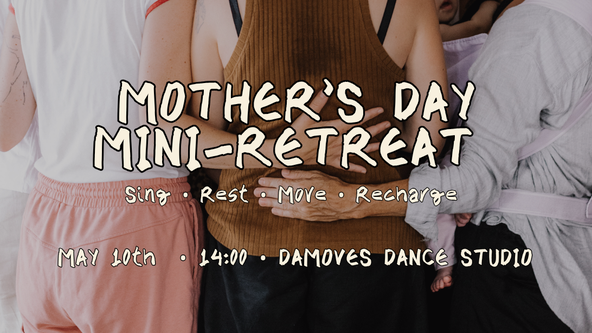
- Mother's Day Mini-Retreat: An invitation to step out of the "mental load" and into a space designed specifically for your nourishment, expression, and connection this Mother's Day
- Singing Mamas Early Summer Term: A warm, supportive space where women of all ages and stages can gather to breathe, sing, and find a sense of community