

- Published on
When and how should I start potty training my child?
- Authors

- Name
- Evgenia Baydikova
- Title
- Elimination Communication & Potty Training Coach
- Socials
How can I prepare my child — and myself — for potty training?
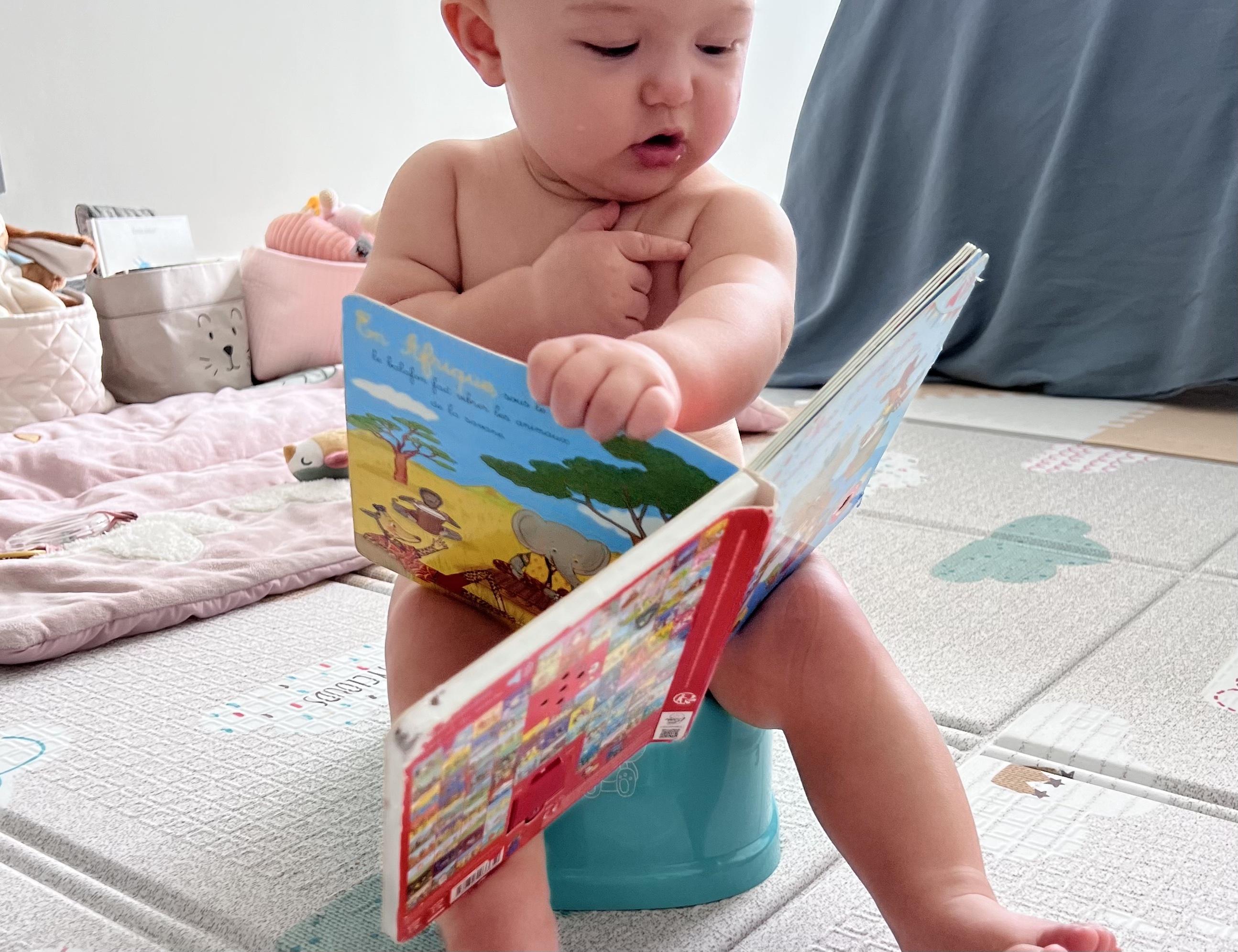
Certified potty training coach Evgenia from The Potty Doula is here to answer our questions on early potty learning — known as Elimination Communication — and how it can ease the transition to independent potty use, right from birth.
Evgenia's answer
When we think about baby milestones, we often think about rolling, crawling, walking, talking, or starting solids. Somehow, collectively, we've decided not to talk about potty training until it's "time" — usually as a toddler milestone between 2 and 4 years old. But who decided that timing, and on what evidence?
Potty training is not just driven by physiological and psychological development — it is also highly culturally dependent and historically relative.
- Timing has shifted: In Western Europe, the U.S., and Canada, potty training currently tends to happen between 24 and 36 months of age (Blum et al., 2003; van Nunen et al., 2015). But in the 1940s — just a few generations ago — most children were potty trained by 18 months.
- Methods vary across the world: Conventional training — popular in Western Europe — teaches potty independence at a specific age. Elimination Communication (EC) takes a different approach: observing and responding to your baby's potty cues from birth. The Digo people of Kenya have practiced something similar for generations, starting within the first 2–3 weeks of life (deVries & deVries, 1977).
Our conception of "when" and "how" to start with the potty is rooted in time and place — norms formed by research and culture. However, like other developmental milestones, there's no one way to achieve potty independence. We can use the framework of Elimination Communication to challenge potty "readiness" as a prerequisite to potty use — treating potty use as a set of skills that develop over time, rather than a single skill trained at a specific age. In short: It's potty learning, not just potty training.
What is Elimination Communication?
Elimination Communication (EC) is the practice of recognizing and responding to your baby's need to pee or poop, rather than relying on diapers for relief.
With time, we learn how babies communicate hunger, tiredness, discomfort, and overstimulation. We recognize their different cries. We notice their sleepy cues — and respond. Similarly, Elimination Communication (EC) is the practice of recognizing and responding to your baby's need to pee or poop, rather than relying on diapers for relief.
Your baby is born with an instinct to avoid soiling themselves — which diapers counteract over time — and EC works with that instinct. Babies communicate their need to go through body language, sounds, facial expressions, or timing patterns. Parents can reinforce that communication through the repetition of specific hand gestures or sounds to build the association between physical sensations and the awareness of needing the potty.
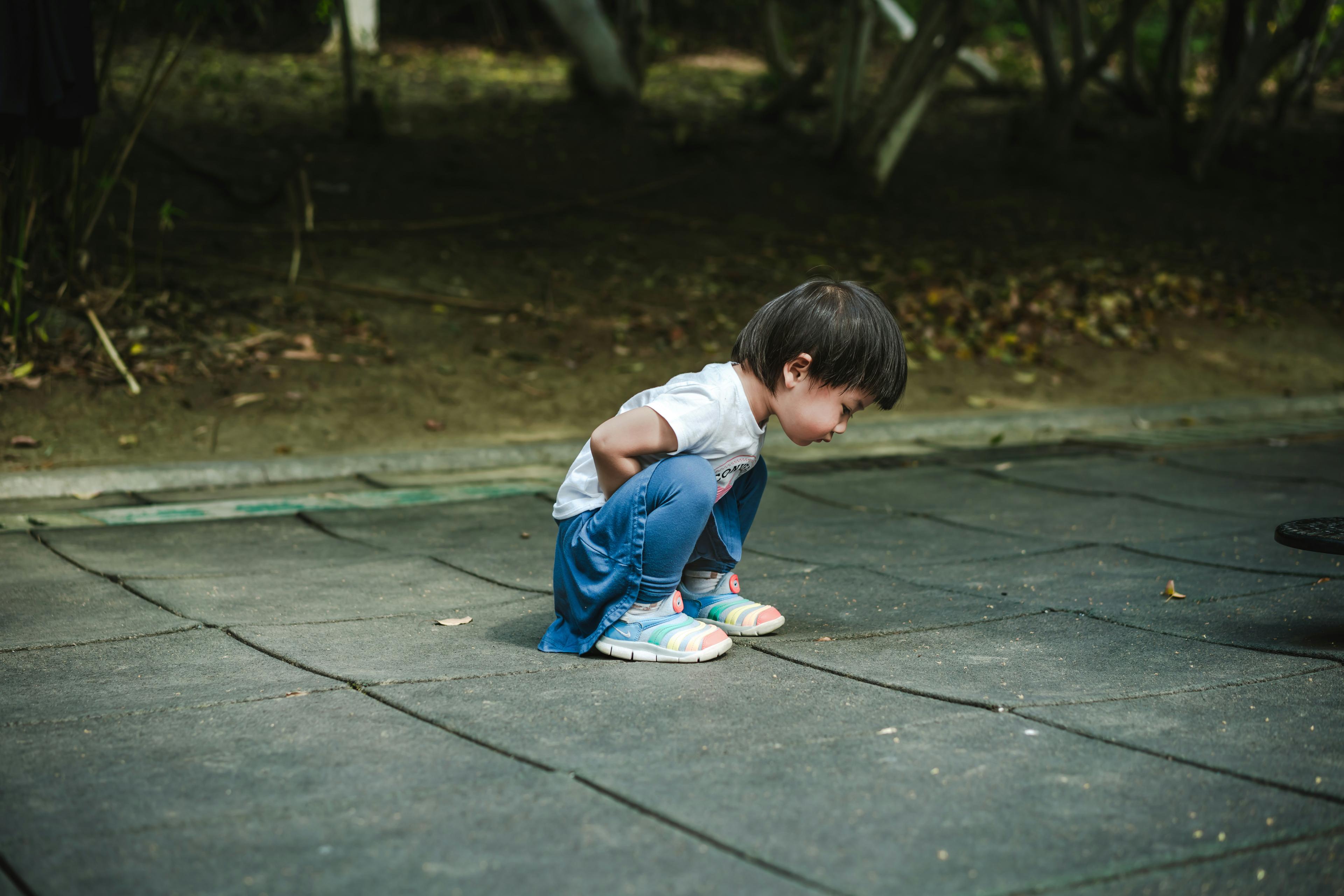
You may have already started noticing behaviors that lead to elimination actions: pausing during play, hiding to poop, becoming still, grunting, squatting, or seeking privacy. These often emerge long before conventional potty training begins!
When parents recognize their baby using potty signs, they can respond by offering opportunities to their baby to use a potty, toilet, sink, or other appropriate place.
The goal of EC isn't perfection or getting every pee or poop in the potty — it's to develop mutual awareness and reduce dependence on diapers over time.
When can I start with the potty?
Independent toileting is made up of dozens of smaller skills that you can start working on from birth.
The question of when to start is heavily debated, and the research is nuanced:
- For conventional training: Research has shown that children who begin toilet training after 24 months often complete the process more quickly (Schum et al., 2002).
- For EC: Night-time dryness, which typically develops after daytime control, appears to be linked to earlier toileting experiences. In a survey of more than 18,000 parents, researchers in China found that children who began EC before 6 months old were less likely to experience bedwetting later in childhood (Wang et al., 2019).
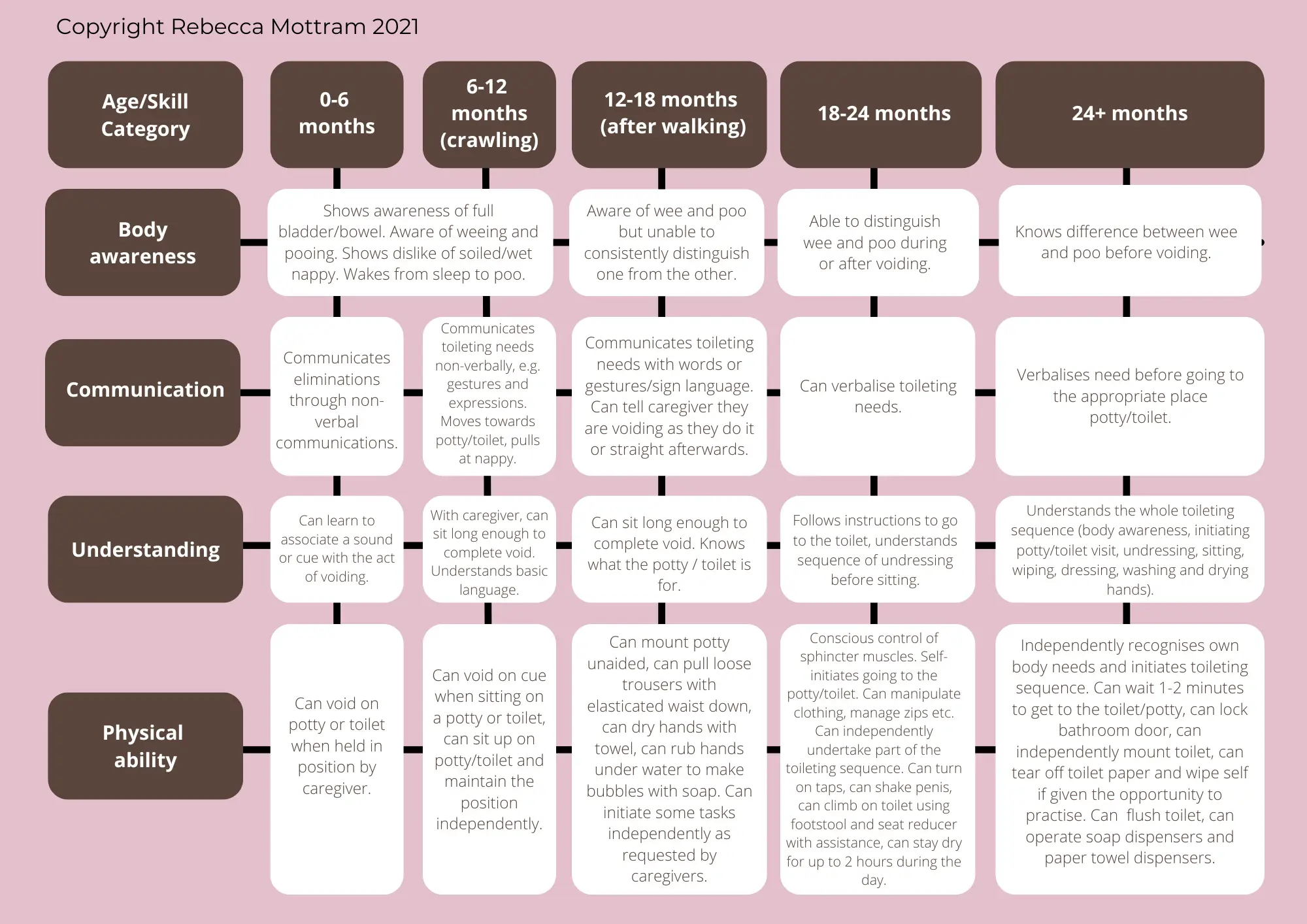
Rather than treating the potty as a single milestone, you can think of independent toileting as made up of dozens of smaller skills that you can start working on from birth. Rebecca Mottram's Potty Skills Grid breaks down potty skills into 4 foundations — body awareness, communication, understanding, and physical ability — that begin to emerge long before children are expected to use the toilet independently.
What does early potty learning look like in practice?
You can practice EC around family life, childcare, work schedules, and disposable diapers. Some families practice from birth. Others start later. Speaking from personal experience, it doesn't have to be all or nothing.
Here's what early potty learning could look like:
- Offering potty at fixed times: After naps, morning wake-ups, before bath time, or before leaving the house
- Diaper-free periods: Take off your baby's diaper after a feed or wake-up, and observe their patterns and cues. How do they signal that they have to go?
Which should I choose: Elimination Communication or conventional potty training?
With EC or both methods together, toileting can be a gradual process that unfolds alongside other developmental milestones, rather than something that starts suddenly at age 3.
Like starting solids, learning to crawl, or learning to talk, there is no single "right" approach or timeline for learning potty skills — and it's not an either-or, or all-or-nothing! Every child develops differently, and every family will find their own rhythm.
Conventional potty training — like the Oh, Crap method — involves teaching a toddler the new skill of using the potty when they're old enough to control their pelvic floor and understand and reason with the potty process. Training is led by the parent and generally happens in a concentrated period of time — which can lead to completing training faster (Schum et al., 2002). It's also easier to handle in a daycare setting as it's a standard, familiar, routine-based approach.
Elimination Communication starts from the assumption that babies already have some awareness of their bodily functions and can participate in the process from the beginning. EC is a two-way learning process, with parents learning their children's cues and needs along the way.
You can practice EC instead of, before, or alongside conventional toddler training techniques. Practicing EC, even part-time or using a hybrid approach, can help you become more aware of your baby's rhythms and enjoy the communication and connection — rather than waiting for a "readiness" signal. Even if it may take more time, in the long run it can help save money, reduce waste, and make the transition from diapers smoother later on. With EC or both methods together, toileting can be a gradual process that unfolds alongside other developmental milestones, rather than something that starts suddenly at age 3.
How do I start with EC?
A simple first step: Spend 20–30 minutes observing your baby after a feed or wake-up and noticing what happens before they pee or poop. You might be surprised by how much they're already communicating!
For a collection of recommended potties, books, travel solutions, and other supplies, I've compiled my favorites here: www.thepottydoula.com/resources
For 1:1 support
If you'd like a personalized one-on-one approach, I am a certified coach through Go Diaper Free for both Elimination Communication and potty training. Founded by Andrea Olson, Go Diaper Free is one of the most widely used educational resources on infant hygiene. Andrea provides comprehensive guidance on the what and why of EC; my role is helping families translate that knowledge into a practical approach that works in everyday life.
Read more about The Potty Doula
References
- Blum, N. J., Taubman, B., & Nemeth, N. (2003). Relationship between age at initiation of toilet training and duration of training: a prospective study. Pediatrics, 111(4), 810–814.
- deVries, M. W., & deVries, M. R. (1977). Cultural relativity of toilet training readiness: A perspective from East Africa. Pediatrics, 60(2), 170–177.
- Mottram, R. (2026). Potty Skills Grid [educational framework]. Little Bunny Bear. Retrieved from https://rebeccamottram.com/pottytraining/
- Schum, T. R., Kolb, T. M., McAuliffe, T. L., Simms, M. D., Underhill, R. L., & Lewis, M. (2002). Sequential acquisition of toilet-training skills: a descriptive study of gender and age differences in normal children. Pediatrics, 109(3), E48.
- van Nunen, K., Kaerts, N., Wyndaele, J. J., Vermandel, A., & Van Hal, G. (2015). Parents' views on toilet training (TT): A quantitative study to identify the beliefs and attitudes of parents concerning TT. Journal of Child Health Care, 19(2), 265–274.
- Wang, X. Z., et al. (2019). The influence of delay elimination communication on the prevalence of primary nocturnal enuresis: A survey from Mainland China. Neurourology and Urodynamics, 38(5), 1423–1429.